Trainees
It is the duty of our consultant to teach junior colleagues as much
as possible about the care of patients with uveal melanoma and other
tumours. The experience that they will gain during their short spell
in our Centre will create lasting impressions, which will greatly influence
the way in which they manage their own patients, years later, once they
become consultants.
Trainees learn
by examining patients in the clinics and the wards, contributing to
patient care, discussing clinical problems and findings with the consultant,
and assisting at surgery. They also gain valuable experience by performing
certain surgical procedures and laser treatments themselves, with appropriate
guidance and supervision and only when it is safe and useful for them
to do so. As a rule, the consultant performs as much of the surgery
himself, because of the specialized and difficult nature of the surgery
and because it is so important to 'get things right first time'.
Visitors
Each year, we receive several ophthalmologists from overseas with a
special interest in ocular tumours. They come to see how our Centre
is organized and how we manage our patients. Some come especially because
they wish to observe the 'trapdoor operation' (ie, 'trans-scleral local
resection'), because this is performed in such a few centres around
the world. Others visit because they can see a wide range of treatments
performed within a short time, which is an unusual opportunity, as other
centres tend to offer only one or perhaps two kinds of treatment. Occasionally,
the visitor is an oncology nurse from another hospital.
Visitors usually
stay only for one week, with a few staying for between two and six weeks,
and one or two staying for about six months. Most visitors are either
distinguished ocular oncologists or trainees working with such persons.
Strict safeguards
ensure that no problems arise as a result of a visit by a doctor from
another hospital. Each visitor is required to submit a brief curriculum
vitae so that we can get official permission from the Medical director
of the Royal Liverpool University Hospital for the visit to take place.
Most visitors come
as observers and are not allowed to perform any treatment or surgery.
If a visitor wishes to get involved in patient care and to perform surgery,
then a contract needs to be drawn up with our hospital. Such a contract
is granted only once original professional certificates have been scrutinized
by the personnel officer and once the visitor has passed a health check,
which includes a chest x-ray and our own blood tests to exclude hepatitis.
Visits to our Centre
by overseas specialists bring several benefits. Firstly, they keep us
all on our toes, asking probing questions and commenting on our methods.
Secondly, they invariably give us very valuable feedback on our results
and on anything they find surprising or unusual. This is almost always
positive criticism, and coming from an expert is most reassuring and
encouraging. Thirdly, it is gratifying for us when we meet them at international
conferences months or years later and when they tell us what changes
they have made to their own Centre after their visit to our department.
There are one or two difficulties that can arise. For example, their
presence can slow down a busy clinic if one is not too careful, although
various discreet ways of not letting this happen have been developed,
for instance, by computerizing the clinical details or dictating my
letter while they are examining the patient. So far, it has always been
a great pleasure to spend some time with our overseas visitors, exchanging
ideas and showing off what a great place Britain is, even if it does
rain solidly during our Sunday afternoon visit to Wales.
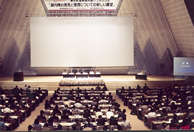
Lectures
Lecturing is an important part of the consultant's life, with him usually
giving about one lecture a month, nearly always quite far away from
Liverpool and usually overseas. On most occasions, he is invited to
give these lectures because ocular oncologists are few and far between
and general ophthalmologists are very keen to keep up to date, even
if they only see one or two patients with an ocular tumour each year.
The meetings include:
Conferences are
hard work and tiring in some respects but provide a refreshing break
from routine and there is nearly always an important lesson or idea
to bring back home.
During the consultant's
absence from the Centre all oncology work practically stops, with as
many new patients as possible being seen the week before his absence.
Any unexpected problems arising during his absence from the department
are dealt with by his colleagues.
The consultant
is never away for more than two weeks in succession, to prevent an excessive
backlog of work from developing. During his absences, trainees are able
to catch up with cataract surgery and other routine operations, under
the supervision of other consultants. This also helps to shorten the
waiting list for non-oncological surgery. The clinics are also used
for general ophthalmic patients to be seen. The secretary, nurse and
data manager invariably have a backlog of filing and other administrative
matters to deal with.
Publications
Scientific Articles
The most satisfactory outcome of any research project is the publication
of any findings in a scientific journal. Articles are written in a standard
style, preceded with a short summary (ie, 'abstract') followed by the
Introduction, Patients and Methods, Results, Discussion and References.
When an article
is submitted for publication, it is subjected to peer review by two
or three acknowledged experts in the field. They prepare an anonymous
critique of the article, recommending to the editor whether the article
should be accepted, rejected, or re-considered after corrections have
been made.
Whenever a scientific
article appears, the title, the authors' names and addresses, and the
abstract are published in an electronic index, which can be reviewed
on the Internet and in any hospital or university library. In this way,
other workers around the world will know about the article and can read
the publication.
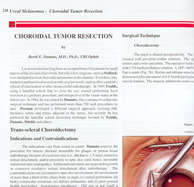
Apart from original
scientific reports, journals also publish 'Case Reports' and 'Letters
to the Editor', which decribe one or two patients with a rare condition.
In addition, journals publish reviews and editorials, which give a broad
overview of a particular subject.
Textbooks
Despite our electronic age, textbooks are still an important source
of information. They are mostly written by numerous authors, each author
writing one or two chapters. They are invited to contribute these chapters
to the textbook by an editor, who is in charge of the selecting contributors
and checking the work submitted.
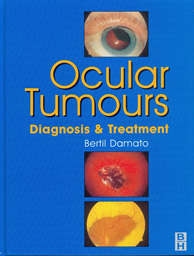
Single author texts
are still published, in which an authority in a special field covers
the entire subject alone or with one or two co-authors.
Electronic Media
Increasingly, scientific texts are being published on CD roms and on
the Internet so that they are more widely available and more easily
'searchable' using key words.
Video Communications
Most video communications tend to show extracts of surgical operations
and are designed to demonstrate a new technique or a method of avoiding
or dealing with complications. These videos are usually shown at conferences,
either as part of an oral lecture, or in a special hall, where videos
from numerous contributors are shown continuously.
Posters
Almost all conferences now include poster displays, with each poster
summarizing a study or case presentation, with graphs and photographs
as necessary. Poster sessions are usually organized so that the authors
will stand next to their exhibits at selected times, so that they are
available to discuss their work with other delegates. Some conferences,
such as the prestigious Association for Research and Vision in Ophthalmology
(ARVO), held in Fort Lauderdale each spring, rely almost entirely on
posters. This is a highly effective form of communication because it
allows a one-to-one discussion with the author of the work.
In all scientific
communications, special precautions are taken to ensure that the patient's
confidentiality is respected at all times. Patients' names and hospital
numbers are obscured and if it necessary to show a photograph of a face,
then consent is obtained from the patient.